
By Salami Abdulrahaman | Abuja
The Minister of Finance and Coordinating Minister of the Economy, Mr. Taiwo Oyedele, has declared that government budgets should not be judged by the billions of naira allocated on paper but by their impact on the daily lives of ordinary Nigerians.
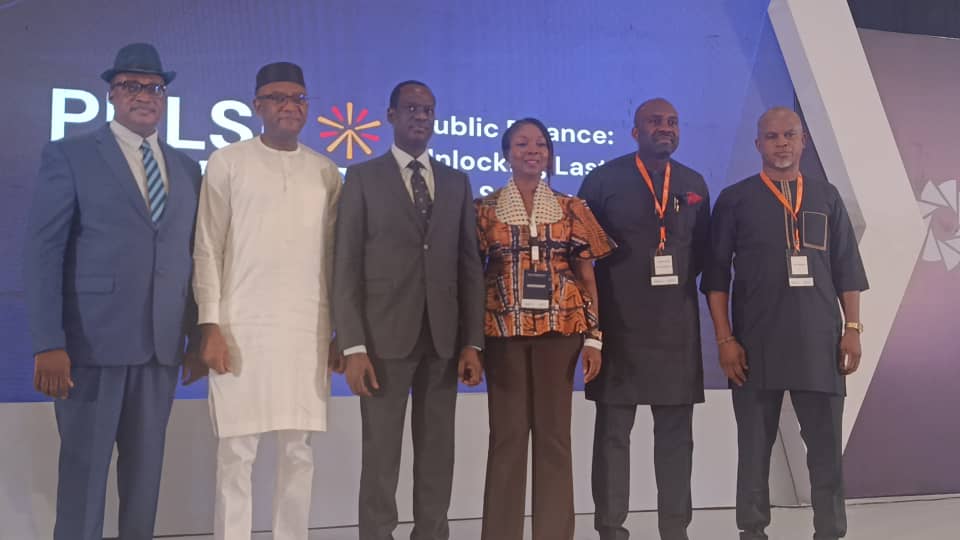
Oyedele made the assertion in Abuja while speaking at the International Budget Partnership (IBP) Nigeria PULSE Summit 2026, where stakeholders examined ways to ensure that public funds translate into essential services at the grassroots.
The summit, with the theme, “Public Finance: Unlocking Last-Mile Services,” focused on the persistent challenge of ensuring that public resources move beyond government offices and reach the communities and citizens they are meant to serve.
The minister said the greatest challenge facing public finance management was the gap between the approval of government budgets and the delivery of services to citizens.
According to him, a budget only becomes meaningful when Nigerians can see and feel its impact through functional healthcare facilities, quality education, access to clean water, effective social protection and improved economic opportunities.
“An approved budget is a promise made. A budget delivered is a promise kept,” Oyedele said.
He stressed that the ultimate goal of public spending must be to improve the quality of life of Nigerians, rather than merely recording increased budgetary allocations or improved macroeconomic figures.
“Success should not be a bigger budget line. Rather, it should be a functioning clinic, a qualified teacher present in a well-resourced school, a tap that runs, a payment that reaches a vulnerable household on schedule, and a community that feels the presence of government in their daily lives,” he said.
Oyedele noted that Nigeria had made considerable progress in budget preparation, classification and the publication of fiscal information, but said the country must now confront the challenge of translating plans and allocations into visible results.
He described the period between budget approval and actual service delivery as the critical “last mile,” where the true value of public funds could either be realised or lost.
“Approval is upstream, delivery is downstream. And the distance between the two, that is the last mile, is where most of the value of public money is actually won or lost,” the minister said.
He identified fiscal constraints, weak systems for moving resources to implementing agencies and communities, as well as inadequate accountability mechanisms, as major obstacles to effective public spending.
According to Oyedele, revenue projections do not always translate into actual income, often forcing governments to make adjustments that affect capital projects and essential service-delivery programmes.
He further noted that procurement delays, fragmented implementation systems and differences in the capacity of sub-national governments could also prevent public funds from reaching their intended beneficiaries.
Drawing attention to the challenges confronting rural communities, the minister said there was a significant difference between funds approved at the federal level and resources that eventually reached citizens at the grassroots.
“A naira approved in Abuja for a state capital and a naira that reaches the primary health centre in the rural wards are not the same naira,” he said.
Oyedele said stronger accountability systems were needed to enable citizens to follow the journey of public resources from government budgets to actual projects and services.
“Whatever is not tracked is, in reality, unlikely to be achieved and may not even exist,” he warned.
The minister also urged the federal, state and local governments to take greater responsibility for their respective roles in improving the welfare of Nigerians.
He described the approach as a “federation of shared prosperity,” in which the federal government provides economic stability, state governments promote prosperity, while local governments ensure that development reaches communities.
“That is not a division of convenience. It is a division of responsibility,” Oyedele said.
He also called on government officials participating in the PULSE Summit to ensure that commitments emerging from its policy laboratories were measurable, properly funded and monitored.
The minister said the summit’s policy labs, which focused on health, education, water, sanitation and hygiene, social protection and debt, should move beyond discussions to produce practical solutions with clear responsibilities, timelines and indicators.
He welcomed the summit’s reform tracker as an important instrument for monitoring commitments and urged government officials to treat every pledge made at the event as a budget line that must be “costed, owned and reported.”
Earlier, the Country Director of IBP Nigeria, Olayinka Babalola, said the challenge for Nigeria was to ensure that improvements in macroeconomic indicators were reflected in the daily experiences of citizens.
She said economic statistics alone could not be regarded as a measure of success if Nigerians continued to face poor access to essential public services.
“The last mile is actually where policy meets reality, where budgets become services and where citizens experience government directly,” Babalola said.
She called for greater citizen participation in decisions relating to public spending, particularly at the state and local government levels.
According to her, governments are entrusted with public resources on behalf of citizens and must therefore be transparent and accountable in how those resources are managed.
Babalola also raised concerns over unrealistic revenue and expenditure projections, warning that repeated failure to meet budget targets could weaken public confidence in government fiscal plans.
She called for public finance information to be simplified and made available in languages and formats that ordinary Nigerians could understand.
The IBP Nigeria Country Director further advocated stronger oversight of public finances by institutions including the Auditor-General, the legislature, local councils, civil society organisations, community groups and the media.
She stressed that accountability must go beyond identifying financial infractions, insisting that there should be consequences for those responsible for mismanagement.
Babalola said the PULSE Summit should ultimately be judged by the practical solutions and reforms that emerge from its discussions.
She added that the summit’s reform tracker would continue to monitor commitments beyond the event, with the aim of ensuring that public discussions are translated into concrete improvements in the lives of Nigerians.
As Nigeria continues to pursue economic reforms and improve its fiscal position, the message from the PULSE Summit was clear: public spending will only be meaningful when its impact is felt in the homes, schools, hospitals and communities of ordinary Nigerians.
