
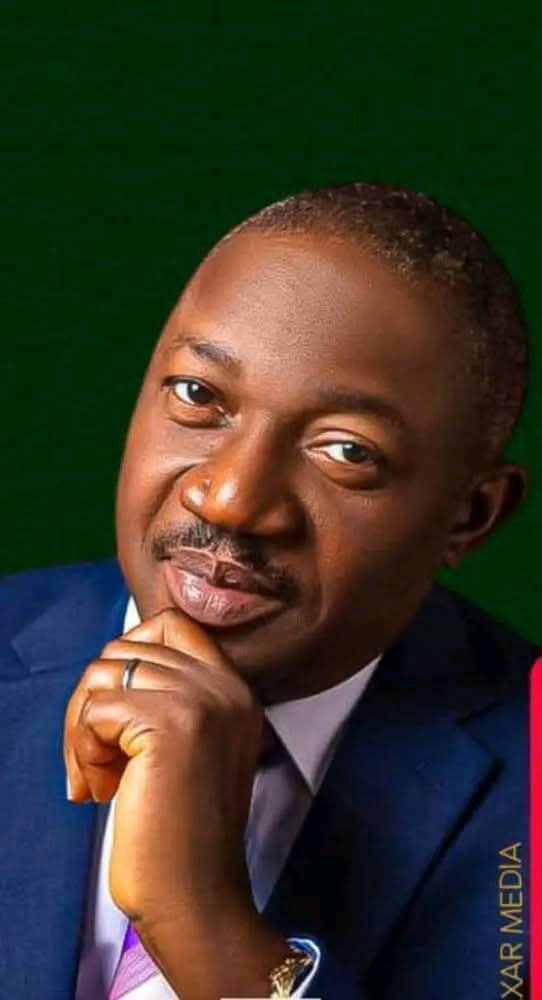
The HBO Media Team has defended the lawmaker representing Ekiti Central Federal Constituency II, Hon. Biodun Omoleye, against allegations of abandoning the Aramoko-Ekiti road project, insisting that work was still ongoing on the road as recently as two weeks ago.
In a rejoinder issued on Tuesday, October 13, 2026, the media team described the allegations circulating on social media as premature and misleading, arguing that public criticism of elected representatives should be based on verified facts rather than political considerations.
The team maintained that Hon. Omoleye remained committed to the completion of projects initiated under his representation, adding that delays should not automatically be interpreted as evidence of abandonment.
According to the statement, work was still ongoing on the Aramoko-Ekiti road project approximately two weeks before the rejoinder was issued. It therefore urged critics to verify the project’s current status before making claims capable of damaging the lawmaker’s reputation.
The media team further attributed some of the challenges surrounding the project’s implementation to funding constraints, alleging that the Federal Government had yet to release funds for the project.
It explained that federal constituency projects often depend on budgetary approvals, the release of funds and administrative procedures, which may not be entirely within the control of an individual legislator.
The statement consequently argued that any assessment of the project’s progress should take these factors into consideration rather than placing the entire responsibility for delays on Omoleye.
The HBO Media Team also condemned what it described as an attempt to turn a development initiative into an instrument of political blackmail. It insisted that while constructive criticism remained essential to democracy, allegations of abandonment should be supported by credible evidence.
On the rationale behind the location of the road project, the team explained that Aramoko-Ekiti was deliberately considered because of its strategic importance as the headquarters of Ekiti Central Federal Constituency II.
It stressed that the project was conceived as part of efforts to attract development to the constituency and was not intended to settle political scores, reward any faction or advance interests associated with the last party primary election.
The media team urged stakeholders to focus on the project’s purpose, progress and eventual impact on residents rather than viewing it through the lens of partisan politics.
Beyond the road project, the statement highlighted other interventions attributed to Omoleye in Aramoko-Ekiti, including the installation of streetlights along Ijofi, Isasa and Ijowa streets, as well as Fola Alade Road.
According to the team, these interventions were aimed at improving public infrastructure, enhancing security and contributing to residents’ welfare.
The statement acknowledged that constituents had every right to demand accountability and improved service delivery from their elected representatives. However, it maintained that such demands should be pursued through responsible engagement, fact-checking and constructive dialogue.
It also reiterated Omoleye’s assurance that projects initiated under his representation would be pursued to completion before the end of his tenure, expressing confidence that his commitment should be assessed based on measurable progress and eventual delivery.
The HBO Media Team called on members of the public, particularly social media users, to exercise restraint and seek clarification from relevant authorities before circulating allegations about public projects.
It concluded that the priority should be the successful completion of the Aramoko-Ekiti road project for the benefit of residents, urging all stakeholders to support efforts toward its delivery and resist attempts to politicise initiatives intended to serve the public interest.
The team maintained that accountability and recognition of development efforts should go hand in hand, insisting that public officeholders must be held responsible for their commitments without being subjected to unverified allegations.
