
By Salami Abdulrahaman
Stakeholders in Nigeria’s energy sector have called for stronger collaboration, innovation, and investment to accelerate the country’s transition to sustainable, smart, and resilient energy systems.
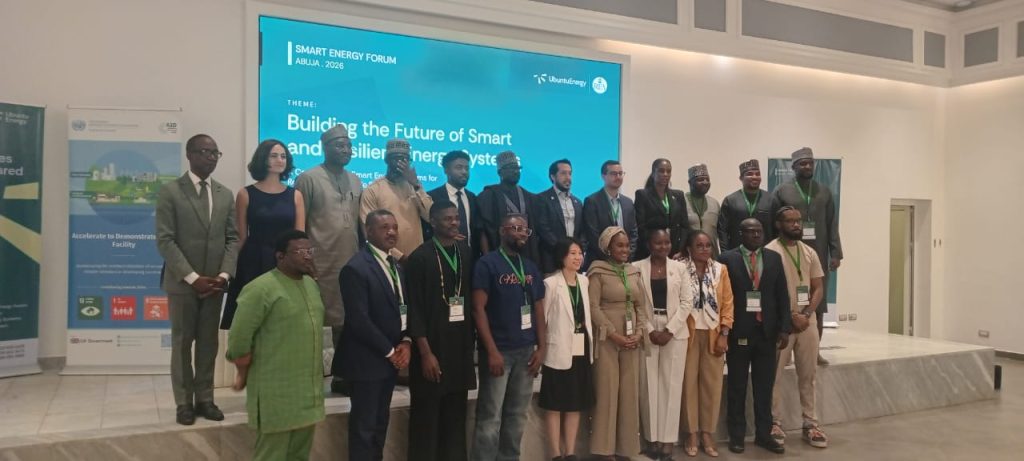
The call was made at the Building the Future of Smart and Resilient Energy Systems conference held on Wednesday at Fraser Suites, Abuja.
The event organized by Ubuntu Energy in collaboration with the Rural Electrification Agency (REA) and supported by UNIDO, Innovate UK, and the UK Government, brought together policymakers, development partners, industry leaders, academics, and private sector stakeholders to explore practical solutions for modernizing Nigeria’s energy sector.
Delivering the opening remarks, Philbert Abaka Johnson, Director and UNIDO Representative for Nigeria and ECOWAS, said Nigeria has a unique opportunity to become a regional leader in green industrialization through the adoption of renewable energy, smart grids, and emerging technologies such as artificial intelligence.
Johnson highlighted the Smart Grid Scale-Up in Nigeria Project, implemented by Greenage Technologies with support from the UK’s Accelerate-to-Demonstrate (A2D) Facility, describing it as a major step toward expanding energy access, reducing dependence on diesel-powered generation, and transforming solar photovoltaic (PV) owners into energy “prosumers” through smart technologies, remote monitoring, and peer-to-peer energy trading.
Speaking at the event, Chukwuemeka Nwangele, Lead, Ubuntu Energy and Director of Greenage Technologies, said the conference theme, “Building the Future of Smart and Resilient Energy Systems,” reflects the urgent need to harness innovation and strategic partnerships to deliver reliable, affordable, and sustainable electricity to Nigerians.
According to Nwangele, the Smart Grid Scale-Up project demonstrates how technology-driven solutions can strengthen grid resilience, expand electricity access to underserved communities, attract private investment, and accelerate Nigeria’s clean energy transition.
Johnson also noted that the initiative complements UNIDO’s broader renewable energy programmes, including the Off-grid Renewable Energy Equipment (OGREE) Project and the ECOWAS African Trade Competitiveness and Market Access (ATCMA) Programme, both of which are designed to strengthen renewable energy value chains, improve quality infrastructure, and promote regional trade.
He reaffirmed UNIDO’s commitment to supporting innovation, mobilizing investment, and creating quality green jobs through inclusive and sustainable industrial development. He urged participants to strengthen partnerships and identify practical solutions that will modernize Nigeria’s electricity infrastructure and accelerate sustainable energy access across Nigeria, the ECOWAS region, and the African continent.
The conference featured presentations and panel discussions on smart grids, artificial intelligence, cloud computing, intelligent energy management, and Africa’s energy transition, highlighting the critical role of digital technologies in building resilient, efficient, and inclusive energy systems capable of driving sustainable industrial development.
