
By Salami Abdulrahaman.
The Centre for Democracy and Development (CDD-West Africa), in collaboration with the Movement Lab Collective, has launched a landmark visual history book, Aluta Continua! Aesthetics of the Nigerian Left, 1950s–2000s, to preserve the stories, sacrifices, and contributions of grassroots activists who played pivotal roles in Nigeria’s democratic evolution.
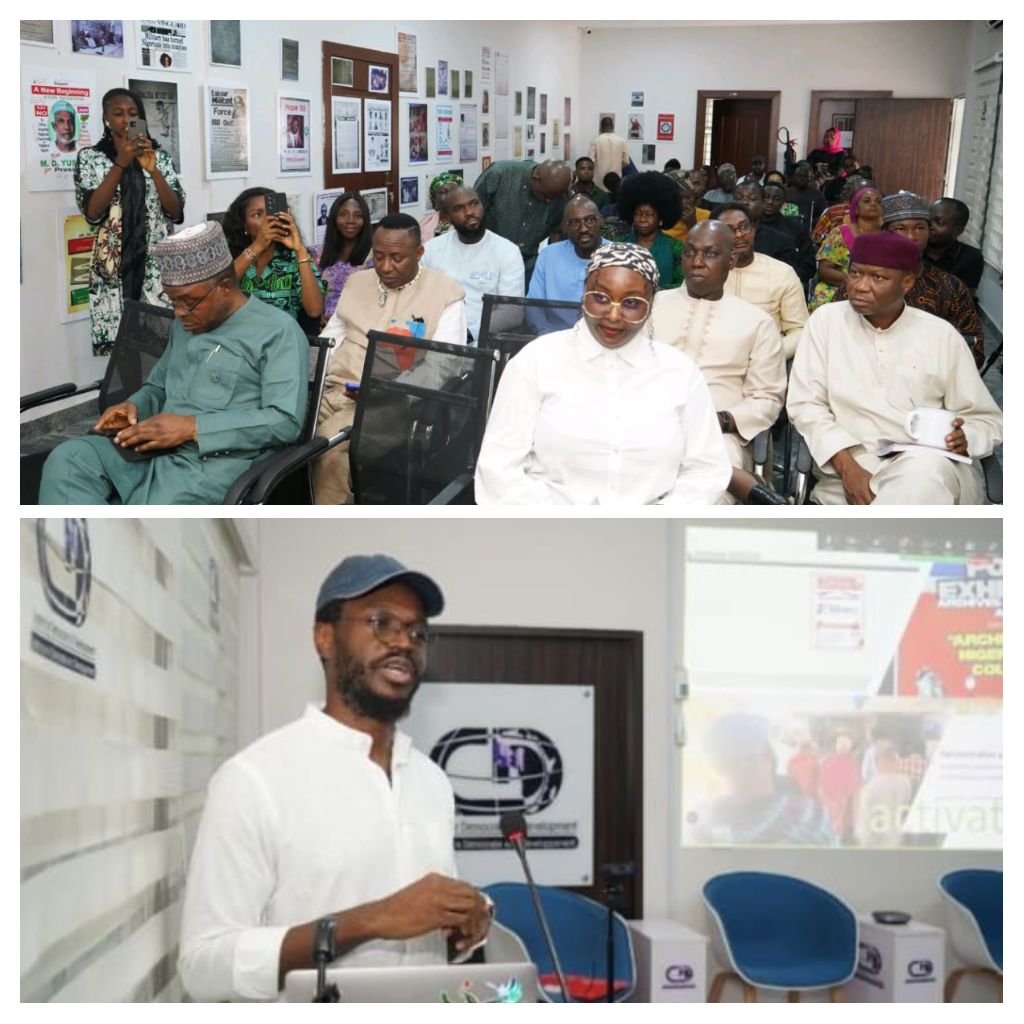
The book was unveiled at the CDD West Africa office in Citec Estate, Airport Road, Abuja, during an event that attracted academics, civil society organisations, labour activists, students, media practitioners and democracy advocates.
Speaking at the launch, the Director of CDD West Africa, Dr. Dauda Garuba said preserving the history of Nigeria’s democratic struggles is critical to strengthening democracy and ensuring that future generations understand the sacrifices made in the pursuit of justice, freedom, and accountable governance.
Garuba welcomed participants, many of whom he described as long-standing comrades in Nigeria’s democratic movement, noting that although activists have taken different paths over the years, they remain united by a shared commitment to building a better nation.
We engage with the present system because it is something we must change not only for ourselves but also for our children and generations yet unborn,” he said.
He explained that CDD West Africa was established to advance democracy through research, policy engagement, and programmes aimed at strengthening democratic institutions, promoting peace and security, and fostering people-centred development.
Reflecting on the exhibition that accompanied the launch, Garuba said the displays chronicled decades of political struggles and democratic activism. He recalled his experience serving as Chief Political Officer to the late Chief Anthony Enahoro during the Movement for National Reformation, describing the exhibition as a powerful reminder of the importance of preserving Nigeria’s democratic history for posterity.
The event also featured a presentation by Dr. Sa’eed Husaini, a fellow at CDD-West Africa, who outlined the archiving the Nigerian Left Project. He said the initiative is designed to preserve the ideas, experiences, and historical records of Nigeria’s progressive movements, ensuring their contributions to nation-building and democratic development are not lost.
Also speaking, Omole Ibukun, a member of the Movement Lab Collective and one of the editors of the publication, said the book seeks to reclaim Nigeria’s democratic history by documenting the experiences of ordinary citizens whose roles have often been overlooked in official historical narratives.
According to him, Aluta Continua! Aesthetics of the Nigerian Left, 1950s–2000s presents a non-fiction account of workers, students, activists, and everyday Nigerians who, despite lacking wealth or political influence, made significant contributions to the country’s democratic journey.
He described the publication as the first volume in a broader effort to document the history of Nigeria’s radical democratic movement from the perspective of ordinary people rather than political elites.
Democracy was not won easily. It was achieved through sacrifice, courage, and persistence, and it remains the collective responsibility of every generation to protect and improve it,” Ibukun said.
He warned against any return to authoritarian rule, stressing that history has repeatedly shown that dictatorship is never a sustainable alternative to democratic governance.
Participants at the event described the publication as a significant contribution to preserving Nigeria’s democratic memory through visual storytelling. They said the book amplifies the voices of ordinary citizens whose resilience and activism helped shape the nation’s democratic landscape while providing a valuable resource for researchers, students, and future generations.
The launch concluded with an exhibition of archival photographs, posters, publications, and historical materials chronicling decades of activism, resistance, and popular movements that have shaped Nigeria’s democratic development.
