
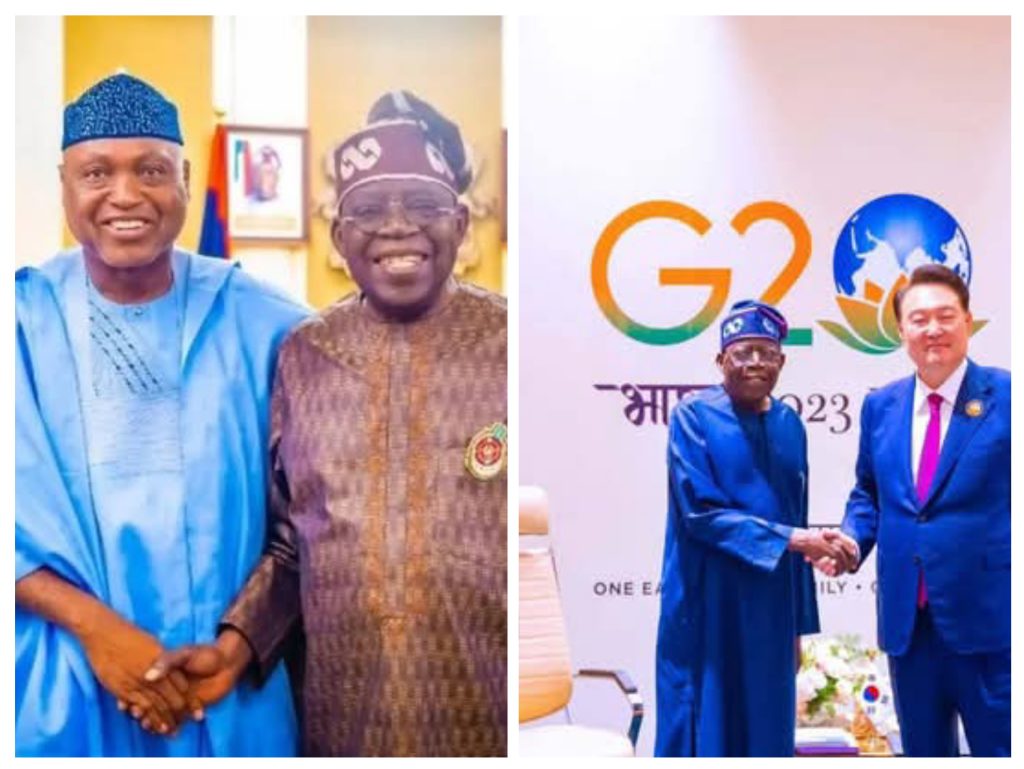
In every culture, the handshake symbolizes respect, connection, and mutual recognition. In Nigeria, it carries the added weight of hierarchy, power dynamics, and cultural decorum. Yet, despite its symbolic significance, the way handshakes are photographed—particularly among Nigerian public officials—has often undermined the very essence it is meant to convey.
The World Photography Day is observed on August 19th every year, and its significance hinges on celebrating the art of photography, honouring photography as both an art form and a method of documentation that has profoundly impacted the way we communicate, express creativity, and preserve memories. It also marks a historical milestone as the date commemorates the invention of the daguerreotype, an early photographic process developed by Louis Daguerre. On August 19, 1839, the French government officially declared the invention free to the world—essentially making photography accessible to all.
Besides, the day marks the global recognition of photographers, recognizing their work and passion as professionals and amateurs who capture stories, preserve history, and influence society through imagery. It’s also a day for people worldwide to share their photos, reflect on photography’s impact on culture and history, and inspire future generations of photographers. Part of the techniques of celebrating it is through photography contests, exhibitions, workshops and lectures on photography.
However, a troubling trend has taken root in our national visual culture: two dignitaries—the Presidents, Ministers, Governors, or Commissioners, or any other dignitary—engaging in a formal handshake, yet both staring blankly into the camera lens rather than at each other. What should be a moment of professional respect becomes an awkward photo-op, lacking warmth, sincerity, and substance. Every person is guilty of this.
This article seeks to challenge that straddle, offering an educational perspective rooted in photojournalism, visual communication, and international standards of professional photography. It is a call to elevate our public imagery from the mechanical to the meaningful.
A snapshot of disconnect? In every handshake photo where the participants are fixated on the camera, the interaction appears frozen, disengaged, and often performative. While the intention might be to “capture the moment” for media documentation, the result is frequently devoid of human connection. The problem isn’t the act of documenting the moment. The issue lies in how the moment is documented.
Having the understanding of the camera as a witness, and not a stage is imperative. Professional photojournalism rests on the principle that the camera should witness, not interrupt. A photographer’s role is to capture moments as they unfold, not to direct the subjects like actors on a stage.
When officials turn their heads toward the camera mid-handshake, the authenticity of the interaction is lost. What could have been a powerful image of diplomacy or unity instead feels like a staged advertisement for self-image.
Globally, some of the most iconic photographs of presidents, prime ministers, and monarchs show them looking at each other during a handshake—smiling, nodding, engaged. This is because it tells a story of mutual respect. It reveals a shared moment, a fleeting yet powerful gesture of human connection. The eye contact, the expressions, and the body language all combine to say, “We met, and it mattered.” This makes a powerful handshake photo.
In media, there’s a concept known as visual literacy—the ability to “read” images beyond what they show on the surface. A visually literate audience can tell the difference between a genuine interaction and a hollow performance.
Public officials must understand that every photograph is a narrative. How they are captured in that frame communicates volumes, not just to Nigerians but to the world. A glance through international media coverage of world leaders tells a clear story. The United States of America has a history of its presidents warmly engaging their counterparts with eye contact. Same with European leaders in dynamic and spontaneous moments of connection.
Perhaps, we can talk of African leaders like former late president of South Africa, Nelson Mandela and former United Nations Secretary General, the late Kofi Annan captured in moments of true human interaction.
In contrast, Nigerian officials often fall into the trap of posed predictability—looking at the camera as though the image is more important than the moment. There is a message in the image. When leaders look at each other during a handshake, it shows genuine engagement; it communicates collaboration, not competition; it tells the people that this is not a photo-op but diplomacy at work. But when they stare into the camera, it comes off as self-congratulatory; it creates a disconnect between intention and perception and it reduces the image to a mere souvenir, not a story. This ultimately creates bad public relations.
A cultural correction becomes pressing. This practice of facing the camera while shaking hands has become normalized to the point of ridicule. One can almost predict it: a visit, a handshake, a camera, or a dead stare. It has become a template rather than a testimony.
What we need in Ekiti State and indeed Nigeria, is a cultural correction—an intentional shift in how Nigerian public imagery is curated, especially by public relations officers, media officers, photographers, protocol units, and government media teams.
Public Relations photos and photojournalism are typically crafted to create an appealing narrative that presents a favourable view of the subject. They focus on real events as they happen, often with an emphasis on truth and authenticity, adhering to ethical guidelines that prioritize accuracy and objectivity.
However, photographers must also shoulder responsibility. Too often, they instruct subjects to “face the camera” without understanding the narrative implications. In doing so, they trade impact for routine.
Professional photographers and photojournalists must be trained to anticipate real moments, shoot candidly and respectfully, avoid over-directing dignitaries and prioritize interaction over pose.
While official photography will always include elements of PR embedded in seeking to control perception and reflecting the truth, there must be a commitment to truthful storytelling too—even in a simple handshake. Let the moment speak for itself.
A major shift must begin with PR officers, protocol officers and media units. Training programmes become imperative in visual ethics, media representation, international visual standards and storytelling through photography. Their choices shape how Ekiti State and Nigeria are visually perceived—internally and abroad.
Let’s not forget: the handshake is not just ceremonial. It is symbolic diplomacy. How we photograph our leaders shaking hands can send messages of peace or tension, respect or formality, collaboration or competition, credibility or implausibility. It is not a minor detail. It is a soft power tool, especially in international relations.
The best photographs are not staged. They are captured—in the moment, often unexpectedly. The photographs of the two smiling parties looking at each other delightfully are not just photos; they are visual metaphors of leadership and humility. Ekiti and Nigeria’s public photography must evolve to embrace this spirit.
Government and public officials must reclaim their authenticity. It is time to rethink how you present yourselves in photographs. Don’t just pose — connect. Don’t just stand — engage. Don’t just smile at the camera — share a moment with your counterpart.
These subtle shifts can transform how leadership is perceived. The people are watching. In this age of social media, every photograph is archived, dissected, and shared widely. Your images do not just reflect who you are, but how you lead. An image that lacks warmth or authenticity may do more damage than silence.
The youth and the future leaders are learning. Young Nigerians absorb leadership cues from what they see. Every photo becomes a reference point for what power looks like, what professionalism means, and how leaders behave. Let’s give them better visuals. Let’s give them imagery that teaches dignity, engagement, and authenticity.
The public relations officers and the media must also evolve by raising their standards. They must stop publishing repetitive, lifeless handshake photos. Editors should demand images that tell stories, not just document protocol. We owe it to the readers—and our democracy.
A national visual identity is at stake. Beyond aesthetics, this is a matter of national branding. How Ekiti and Nigerian leaders are visually represented affects how the state and the country are perceived globally. Let us craft a national visual identity that is smart, sincere, and modern.
This is a challenge to change. To every PR officer, government photographer, press officer, protocol director, and official, next time a handshake happens, let the leaders look at each other. Let the moment breathe. Then press the shutter. The result will be a photograph worth remembering—and publishing.
The time for visual integrity is now. Ekiti and Nigeria deserve imagery that reflects the depth of our culture, the strength of our leadership, and the humanity of our people. This begins with small changes, like how we document a handshake.
It’s time we moved from posed to powerful, from rigid to real, from predictable to purposeful because every picture tells a story—and the story of Ekiti and indeed Nigeria deserves to be told with integrity, intention, and truth.
